Pay in installments of $6.62 with
 ,
,
 and
and

Shipping Estimate
USA
- USA
- CAN
- USA
- CAN
Ships within 48 hours · Estimated delivery Jul 2 - Jul 7
 Promo Codes Available:
For Your Every Summer RSVP, with Code: SUMMER15
Description
madagascar palm plant Buy Madagascar Palm Phoenix, AZ | Pachypodium lamereiPhoenix's Boldest Tropical Succulent Madagascar Palm for Desert Statement Landscapes Madagascar Palm (Pachypodium lamerei) is one of the most striking and unusual plants you can grow in the Phoenix Valley. Despite its common name, it's not actually a palm it's a succulent tree from Madagascar with a thick, spiny silver trunk topped by a crown of glossy tropical leaves. The sculptural silhouette commands attention in any landscape, adding instant
Phoenix's Boldest Tropical Succulent — Madagascar Palm for Desert Statement Landscapes
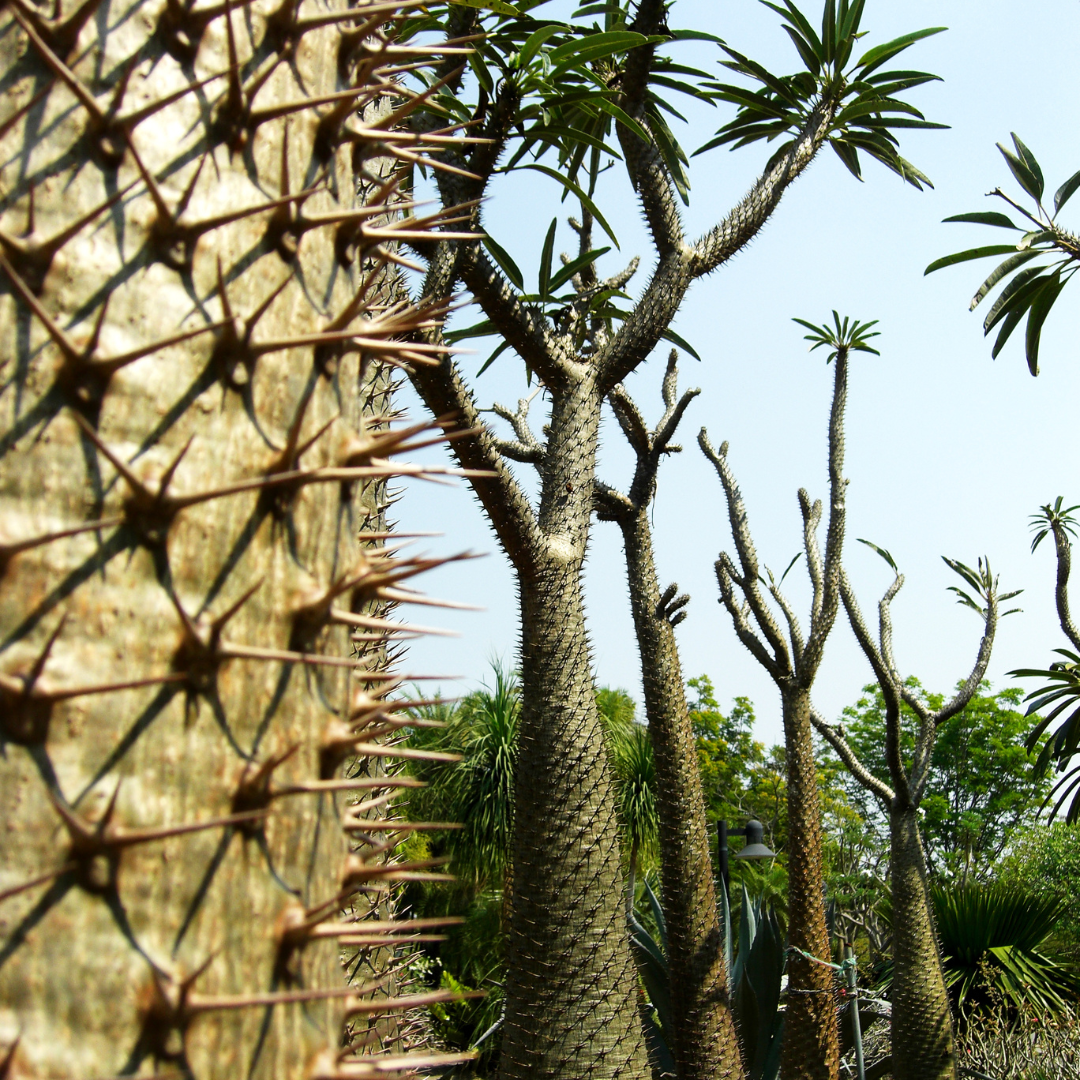
Madagascar Palm (Pachypodium lamerei) is one of the most striking and unusual plants you can grow in the Phoenix Valley. Despite its common name, it's not actually a palm — it's a succulent tree from Madagascar with a thick, spiny silver trunk topped by a crown of glossy tropical leaves. The sculptural silhouette commands attention in any landscape, adding instant exotic drama to Scottsdale courtyards, Gilbert poolside plantings, and Chandler modern desert gardens. Extremely drought-tolerant once established, Madagascar Palm thrives in Phoenix's heat and sun with almost zero supplemental care — making it one of the most rewarding statement plants for Valley homeowners.
Madagascar Palm Plant Details
| Attribute | Detail |
|---|---|
| Scientific Name | Pachypodium lamerei |
| Common Names | Madagascar Palm, Club Foot, Pachypodium |
| Mature Height | 6–15 feet in Phoenix landscapes (up to 20 ft in ideal conditions) |
| Mature Width | 3–5 feet (crown spread) |
| Growth Rate | Slow to moderate — 6–12 inches per year in Phoenix |
| Sun | Full sun (6+ hrs). Loves reflected heat from walls and pavement. |
| Water | Very low once established. Store water in trunk like a cactus. |
| USDA Zones | 9b–12 (Phoenix is Zone 9b–10a — protect from hard frost below 28°F) |
| Soil | Well-draining required. Thrives in sandy, rocky Arizona soils and caliche. |
| Foliage | Semi-deciduous — glossy green leaves in warm months, may drop in winter |
| Bloom | White fragrant flowers at crown in summer (mature specimens) |
| Trunk | Thick, silver-gray, covered in sharp spines — stores water for drought survival |
Madagascar Palm Uses in Phoenix Landscapes
Sculptural Focal Point & Specimen Plant
A single Madagascar Palm commands attention in any front yard, courtyard, or entryway. The thick spiny trunk and palm-like leaf crown create a silhouette unlike anything else in the desert landscape. Plant a 10–25 gallon specimen in a prominent gravel bed in Scottsdale, Paradise Valley, or Gilbert for instant architectural drama. Uplight at night for a stunning shadow effect against stucco walls.
Modern Desert & Tropical Fusion Gardens
Madagascar Palm bridges the gap between desert and tropical aesthetics — perfect for Phoenix homeowners who want an exotic look without the water bill. Pair with Firestick Euphorbia, Blue Agave, and Golden Barrel cactus for a curated succulent collection. In Tempe and Mesa, group 2–3 Pachypodium at varying heights with Desert Spoon and Ponytail Palm for a dramatic "succulent forest" effect.
Pool-Friendly Plantings
Madagascar Palm is an excellent pool-adjacent plant. It drops minimal litter, has no invasive roots, and its upright form won't encroach on walkways or pool equipment. The tropical crown adds resort-style ambiance to Chandler and Peoria pool decks. Plant at least 3–4 feet from high-traffic areas due to the spiny trunk.
Container & Patio Accent
Smaller specimens (1–5 gallon) thrive in large decorative containers on Phoenix patios. Container planting also makes it easy to move indoors during rare hard freezes. A Madagascar Palm in a sleek modern planter adds instant character to outdoor dining areas, rooftop terraces, and office entries.
Best Time to Plant Madagascar Palm in Phoenix
Spring (April–May) is the ideal planting window when warm soil and rising temperatures fuel rapid root establishment. Fall (October) works as a second option if you can protect from early cold snaps. Never plant in winter — Madagascar Palm is frost-sensitive and needs warm soil to establish. If temperatures are expected below 28°F, provide frost cloth protection or move containers indoors.
How to Plant Madagascar Palm
- Dig wide, not deep — 2–3x the root ball width, same depth. Do not plant deeper than the original soil line.
- Ensure excellent drainage — break through any caliche layer. Add coarse pumice or gravel if soil holds water. Root rot is the #1 killer.
- Backfill with native soil — a 70/30 mix of native soil to pumice or coarse sand is ideal.
- Spacing — 4–6 feet from structures; 5+ feet between multiple specimens.
- No water basin — Madagascar Palm must dry out between waterings. Skip the soil ring.
- Gravel mulch — 2–3 inches of decomposed granite. Avoid organic mulch that traps moisture at the base.
Watering Madagascar Palm in Phoenix
First Year Watering Schedule
- Weeks 1–2: Water once deeply, then let soil dry completely (7–10 days).
- Months 1–3: Every 10–14 days in warm months. Let soil dry completely between waterings.
- Months 4–12: Every 2–3 weeks in summer; stop watering entirely in winter when leaves drop.
- After Year 1: Every 3–4 weeks in summer; no water in winter. The trunk stores water like a cactus.
Drip Irrigation
Place 1–2 emitters (1 GPH) 12–18 inches from the base. Madagascar Palm is extremely sensitive to overwatering — more plants die from too much water than from drought. When in doubt, skip a cycle. If the trunk feels soft or spongy, stop watering immediately and let it dry out. A firm, hard trunk means the plant is healthy.
How fast does Madagascar Palm grow in Phoenix?
Slow to moderate. Expect 6–12 inches of trunk height per year in full sun with good drainage. A 1-gallon plant may take 5–8 years to reach 5 feet. Larger specimens (10–25 gallon) provide instant impact and are worth the investment if you want immediate presence.
Is Madagascar Palm cold hardy in Phoenix?
It handles Phoenix winters well in most years. The main risk is hard freezes below 28°F, which can damage or kill the growing tip. Cover with frost cloth during cold snaps, or grow in a container that can be moved indoors. In the warmer parts of the Valley (central Phoenix, south Scottsdale), it rarely needs protection.
Will Madagascar Palm bloom in Phoenix?
Yes, mature specimens (typically 4+ feet tall and 5+ years old) produce clusters of fragrant white flowers at the crown in summer. Blooming is more reliable on well-established, sun-exposed plants that receive minimal winter water.
Is the sap toxic?
Yes, Pachypodium sap is mildly toxic and can irritate skin and eyes. Wear gloves when pruning or handling damaged plants. Keep away from curious pets and small children.
Why is my Madagascar Palm losing leaves?
Leaf drop in winter is completely normal — it's a semi-deciduous plant that goes dormant in cool weather. New leaves emerge in spring when temperatures warm. If leaves drop in summer, check for overwatering or root rot.
You May Also Like
- Madagascar Palm - Pachypodium geayi — a close relative with a slimmer trunk and narrower leaves for a different silhouette.
- Ponytail Palm — another sculptural succulent tree with a swollen trunk and cascading leaves.
- African Ocotillo — tall, spiny stems with a similar exotic character.
- Boojum Tree — another bizarre, sculptural desert specimen that pairs dramatically with Pachypodium.
- Firestick Euphorbia — adds vivid orange-red color contrast at the base of a Madagascar Palm.
How Many Madagascar Palm Do I Need?
This is a tall, vertical specimen succulent tree with a 3 to 5 foot crown, so it is planted singly or in small clusters rather than as a hedge. Use one as a courtyard or front-yard focal point, or stagger 2 to 3 at varying heights for a sculptural grouping:
| Planting | Spacing | Plants |
|---|---|---|
| Single focal specimen | 4 to 6 ft from walls | 1 |
| Staggered cluster | 5 ft apart | 2 to 3 |
| Row along a wall | 5 ft apart | 1 per 5 ft |
Set it back at least 3 to 4 feet from walkways, seating, and pool edges so no one brushes the spiny trunk.
Madagascar Palm Season-by-Season in Phoenix
- Spring (Apr to May): Glossy green leaves flush from the crown as soil warms. The best planting window. Mature plants may set fragrant white crown flowers heading into summer.
- Summer (May to Sep): Active growth and peak bloom on established specimens in full sun and reflected heat. The trunk stores monsoon moisture; water sparingly and let soil dry fully between cycles.
- Fall (Oct to Nov): A workable secondary planting window for well-rooted plants if you can shield early cold snaps. Begin tapering water.
- Winter (Dec to Jan): Semi-deciduous and dormant: leaves drop in cool weather and the trunk rests. Stop watering entirely. Frost-sensitive, so cover with frost cloth or move containers indoors when temperatures fall below 28°F.
At a Glance
✔ Heat-Loving (Reflected-Heat Tolerant) ✔ Drought-Tolerant ✔ Pool-Friendly (Low-Litter) ✔ Low-Maintenance ✔ Fire-Wise ✔ Deer & Rabbit-Resistant
Plant It With
- Madagascar Palm (P. geayi): the slimmer, narrower-leaved relative for a paired collection of both species.
- Ponytail Palm: a swollen-based sculptural succulent tree that echoes the exotic crown form.
- African Ocotillo: tall spiny stems with a matching exotic character for a focal grouping.
- Boojum Tree: a bizarre columnar Baja specimen that pairs dramatically with Pachypodium.
Is Madagascar Palm Right for Your Yard?
It is ideal for a hot, full-sun spot with razor-sharp drainage: a gravel focal bed, modern courtyard, or a movable container near a pool where its minimal litter is a plus. Amend heavily with pumice, skip the water basin, and let it dry hard between waterings. Not a fit if your site stays wet in winter, sits in deep shade, or drops below 28°F without protection, since overwatering and hard frost are its two biggest risks. Wear gloves when handling: the sap is mildly toxic and the trunk spines are sharp.
Shipping Notes
- Free Standard Shipping on $100+ Orders to the USA.
- Except Preorder products are shipped in 48 hours.
- Delivery to the USA:
- Standard Shipping : 3-10 business days
- If time is of the essence, please consider selecting expedited delivery for faster service.
Exchange/Return Notes
- We offer a 30-day return/exchange service after receiving.
- Final sale items are not eligible for returns or exchanges.
- To process your return/exchange, please contact us at [email protected]
- Please click here for more details>>> Return & Exchange Policy