Pay in installments of $6.47 with
 ,
,
 and
and

Shipping Estimate
USA
- USA
- CAN
- USA
- CAN
Ships within 48 hours · Estimated delivery Jul 3 - Jul 8
 Promo Codes Available:
For Your Every Summer RSVP, with Code: SUMMER15
Description
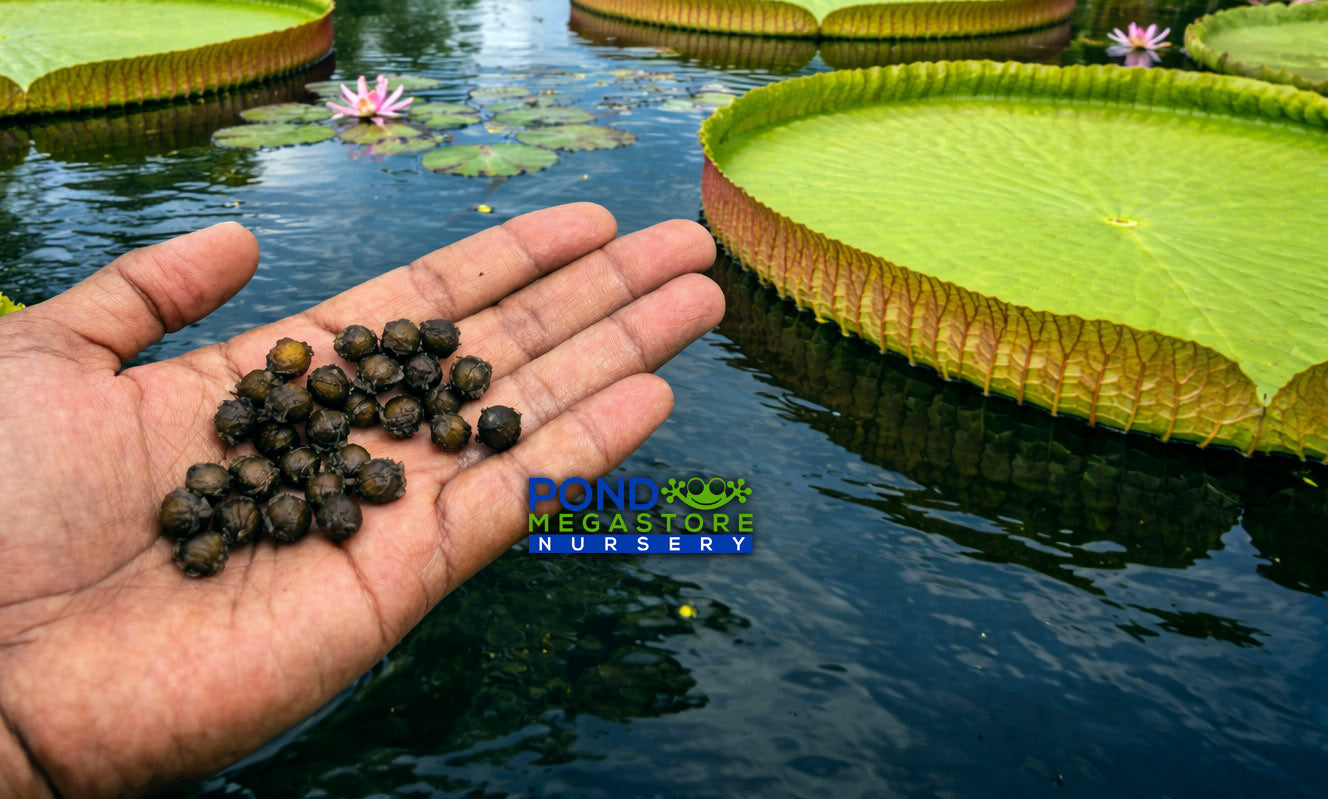
seeds for garden amazon Victoria Bolivia (5 SEEDS) Water Lily Platter Exclusive* Pond MegastoreVictoria 'boliviana' Worlds Largest Water Lily Species (5 Pack Seed) Limited & hard to obtain. Victoria boliviana is the largest water lily speciesnew to science in 2022 and recognized by Guinness World Records for its extraordinary size. Note, yes these are expensive but you should be able to get a few plants if you follow the directions from these they have a good germination rate when directions are followed. In cultivation, its floating pads can
Victoria 'boliviana' — World’s Largest Water Lily Species (5-Pack Seed) Limited & hard to obtain.
Victoria boliviana is the largest water lily species—new to science in 2022 and recognized by Guinness World Records for its extraordinary size. Note, yes these are expensive but you should be able to get a few plants if you follow the directions from these they have a good germination rate when directions are followed.
In cultivation, its floating pads can exceed 2.8 m (9+ ft) and the record pad measured 3.2 m (10 ft 6 in) in Bolivia. Flowers can reach up to 36 cm (about 14 in) wide in ideal conditions.
Pond Megastore 2026 release: This listing is sold as a 5-pack of seed to start in spring. It is NOT sold as a late-spring young plant like our Victoria cruziana. Seeds require time, warmth, and careful steps—please read the directions fully.
Why water gardeners want Victoria boliviana
-
The largest water lily species ever confirmed
-
A newly recognized species that was long misidentified until DNA + historic records confirmed it
-
A true collector “giant water platter” that becomes a pond centerpiece
What you’re buying
-
5 seeds (time-sensitive spring start)
-
Intended for growers who can provide heated water and strong light
-
Expect thorns/spines on giant Victoria plants—handle carefully as they mature
Seed germination (clear, time-sensitive steps)
Botanic gardens commonly germinate Victoria seeds in heated water around 80°F (≈28–30°C).
1) Prepare the sowing pot (community pot works great):
-
Plant 5 seeds in one pot to start.
-
Sow seeds about 1.5× the seed’s diameter deep.
2) Soil mix:
-
Use heavy soil (clay-leaning loam is ideal) and add coarse grit at about 5:1 soil:grit.
-
No fertilizer at this seed stage (the seed’s stored food carries it early).
3) Heat & light:
-
Keep water ~80°F while waiting for germination.
-
Provide bright light (greenhouse sun or strong grow lights).
4) What seedlings look like (normal progression):
-
First leaf is thread-like, then a triangular leaf, and by the third leaf you’ll see the “platter” look begin.
5) When to pot individually:
-
Once seedlings have 1–2 floating leaves, separate into individual pots.
-
Begin fertilizer at about ¼ strength at this stage, then increase as growth accelerates.
6) Keep upsizing pots (don’t let them root-bind):
-
Repot as needed so growth doesn’t stall.
_______________________________
Exact comments from other victoria from Longwood gardens:
Victoria care once established (big plant rules)
-
Warm water is everything. Kew germinates and grows giant Victorias in warm water (about 28°C / 82°F) for strong growth.
-
Heavy feeder. Botanical collections fertilize these weekly or consistently through peak growth.
-
Flowers are short-lived and dramatic. Giant Victoria flowers open at night, begin white and then turn pink, and the bloom cycle is brief.
-
Likely beetle-pollinated in nature (research ongoing for V. boliviana specifically).
Do’s ✅ / Don’ts ❌ (giant Victoria edition)
Do
✅ Keep water warm and light strong during seedling stage
✅ Use heavy loam/clay-leaning soil + grit for stability
✅ Pot up before plants become root-bound
✅ Handle mature plants carefully—Victorias can be spiny
Don’t
❌ Don’t start without a heater—cool water = stalled growth
❌ Don’t fertilize the seed pot at sowing (wait until floating leaves)
❌ Don’t delay potting up once seedlings have floating leaves
______________________________________________
How Victoria boliviana differs from amazonica and cruziana (rims + range)
All three are giant “water platter” lilies with upturned rims, but V. boliviana has a distinctive rim behavior and a different native range.
Rim and underside differences (easy ID cues)
-
Victoria amazonica
Giant leaves with upturned rims and a purplish-red underside armed with sharp spines. -
Victoria cruziana
Known for very thick, upturned rims (often reported up to ~20 cm in cultivation) and generally a greener look to the rim compared with amazonica. -
Victoria boliviana (largest known species)
Kew notes a large rim ~7 cm tall and an outer rim that appears bright red.
The formal species description also reports a unique rim color variability: the underside of the upturned rim can vary between individual plants in the same locality from dark maroon to very pale green/whitish—a characteristic noted as not seen in the other species.
Boliviana is recognized as the largest known Victoria, with leaves observed >3 m and record leaves at 3.2 m.
Why they remained separate species (geography + genetics)
These Victorias occur in different river basins/regions, limiting gene flow and helping them stay genetically distinct over time:
-
V. amazonica: Amazon basin and other major basins (including Guaviare/Orinoco tributary and Essequibo).
-
V. cruziana: Paraná River system and tributaries (the temperate member of the group).
-
V. boliviana: Bolivian wetlands (Llanos de Moxos), with records concentrated in the Mamoré river basin.
Kew also emphasizes that DNA analysis showed V. boliviana is genetically very different from the other two species (and closely related to V. cruziana).
Germination note (our honest observation)
Many growers find Victorias variable from year to year. In our experience so far, boliviana seed tends to germinate a bit more readily than cruziana, but it still requires warm water and careful timing. (Results can vary with seed freshness and conditions.)
How Victoria boliviana differs from amazonica and cruziana (rims + range)
All three are giant “water platter” lilies with upturned rims, but V. boliviana has a distinctive rim behavior and a different native range.
Rim and underside differences (easy ID cues)
-
Victoria amazonica
Giant leaves with upturned rims and a purplish-red underside armed with sharp spines. -
Victoria cruziana
Known for very thick, upturned rims (often reported up to ~20 cm in cultivation) and generally a greener look to the rim compared with amazonica. -
Victoria boliviana (largest known species)
Kew notes a large rim ~7 cm tall and an outer rim that appears bright red.
The formal species description also reports a unique rim color variability: the underside of the upturned rim can vary between individual plants in the same locality from dark maroon to very pale green/whitish—a characteristic noted as not seen in the other species.
Boliviana is recognized as the largest known Victoria, with leaves observed >3 m and record leaves at 3.2 m.
Why they remained separate species (geography + genetics)
These Victorias occur in different river basins/regions, limiting gene flow and helping them stay genetically distinct over time:
-
V. amazonica: Amazon basin and other major basins (including Guaviare/Orinoco tributary and Essequibo).
-
V. cruziana: Paraná River system and tributaries (the temperate member of the group).
-
V. boliviana: Bolivian wetlands (Llanos de Moxos), with records concentrated in the Mamoré river basin.
Kew also emphasizes that DNA analysis showed V. boliviana is genetically very different from the other two species (and closely related to V. cruziana).
Germination note (our honest observation)
Many growers find Victorias variable from year to year. In our experience so far, boliviana seed tends to germinate a bit more readily than cruziana, but it still requires warm water and careful timing. (Results can vary with seed freshness and conditions.)
There are no returns on victoria boliviana seeds.
Shipping Notes
- Free Standard Shipping on $100+ Orders to the USA.
- Except Preorder products are shipped in 48 hours.
- Delivery to the USA:
- Standard Shipping : 3-10 business days
- If time is of the essence, please consider selecting expedited delivery for faster service.
Exchange/Return Notes
- We offer a 30-day return/exchange service after receiving.
- Final sale items are not eligible for returns or exchanges.
- To process your return/exchange, please contact us at [email protected]
- Please click here for more details>>> Return & Exchange Policy